Business
How does the Serbian Digital Assets Act resemble Hazard's transfer from Chelsea to Real?

In football history, Eden Hazard's transfer from Chelsea to Real Madrid is remembered as one of the most expensive ever, and expectations were justifiably high. However, those expectations were not fully met, and Hazard himself ended his football career too early, so the effects of the transfer remained modest. Although it is obvious that Hazard has no influence or connection with the legislative framework of Serbia, the similarities between his career and the path of the Law on Digital Assets (from enactment to implementation) are noticeable.
The development of information technologies has led to the influx of new trends and opportunities in the business world. With the enactment of the Law on Digital Assets (LDA), "the door was opened" to include digital assets in business, i.e., legal relations. The authors recognize that, with the emergence of virtual currencies, the business community has, for various reasons (speculative, administrative simplification in executing transactions, innovative, etc.), decided to include the acquisition of virtual currencies and transactions in virtual currencies in their regular business processes.
The LDA initially defined what is considered a digital asset in general, with virtual (crypto) currency being specifically singled out. It refers to a type of digital asset that has not been issued and whose value is not guaranteed by a central bank or other public authority, which is not necessarily (but can be) linked to a legal tender and does not have the legal status of money or currency, but is accepted by natural or legal persons as a means of exchange and can be purchased, sold, exchanged, transferred, and stored electronically.
How does the law treat transactions made with cryptocurrency?
Starting from the fact that under the LDA virtual currency is legally recognized as a means of exchange (but not legal tender), interested parties should be able to freely buy and dispose of virtual currency. We say "should" because in practice, free disposal seems to be called into question. Therefore, the subject of our analysis is the legal treatment of transactions with virtual currency when a Serbian (resident) company gives it in exchange for a service provided to that company by a foreign (non-resident) company (the so-called Business to Business – B2B transaction).

We start from the assumption that the Serbian company acquired the cryptocurrency in a lawful manner (mining, through a crypto exchange, etc.) and that it has a need for services from a foreign company, whereby it has agreed with the foreign company to settle the obligation based on the received services with cryptocurrency. In practice, the question arose as to whether this form of settling obligations is possible, and we will try to answer that question below.
Therefore, we consider it worth mentioning that in the preamble of the Markets in Crypto Assets (MiCA) regulation of the European Union (to which Serbia declaratively aspires and with which it harmonizes its regulations), it is proclaimed that a digital asset is a digital representation of value or rights that can bring significant benefits to market participants. In addition, MiCA states that if used as a means of payment, digital assets can, by limiting the number of intermediaries, enable cheaper, faster, and more effective payments, especially cross-border payments.
Also, in the report of the Financial Action Task Force (FATF), digital currency is defined as a digital symbol of value that can be digitally disposed of and functions as a means of exchange and/or a store of value, but does not have the status of legal tender, and that it is not issued nor guaranteed by any institution, fulfilling the functions of exchange and store of value only on the basis of an agreement within the community of cryptocurrency users.
The Crypto Dilemma
The dilemma we face is the following: given that cryptocurrency is a means of exchange – legal entities in B2B transactions with foreign companies can conduct an exchange of cryptocurrency for the services of a foreign company and thus settle the obligation towards that company. For example, a Serbian company uses marketing services provided by a foreign company.
However, the answer to the posed dilemma is typically legalistic and sounds like – "it depends". Namely, the stance prevailing in practice is that the settlement of obligations by exchanging cryptocurrency for a service is a subject regulated by regulations in the field of foreign exchange operations, payment systems, and foreign trade operations.
Rules on Foreign Exchange Operations
The answer to the question of why we are even considering the application of foreign exchange rules in the domain of settling obligations with cryptocurrency stems from the fact that the LDA refers to the appropriate application of regulations governing foreign exchange operations when it comes to cases of payment, collection, and transfer in foreign currency in connection with transactions with digital assets.
This phrase does not tell us much, as it opens up multiple dilemmas in a legal field where dilemmas should not exist. Namely, the Law on Foreign Exchange Operations (LFEO), among other things, regulates matters of payment, collection, and transfer between residents and non-residents in foreign means of payment and in dinars, prescribing that foreign payment transactions are carried out in foreign currency and in dinars through a bank.

Based on the authority granted by the LFEO, the National Bank of Serbia (NBS) has adopted bylaws that elaborate on the application of the LFEO in more detail, primarily in the domain of payment transactions. Thus, among other things, the following are defined:
conditions of payment, collection, and transfer on current and capital transactions in foreign currency and dinars;
that foreign payment transactions include payments, collections, and transfers on current and capital transactions in foreign currency and dinars between residents and non-residents;
but also that payments with foreign countries mean payments between a non-resident, on one side, and a resident or non-resident, on the other side, where either the payer's payment service provider or the payee's payment service provider does not have a seat in the Republic of Serbia, and which are carried out in accordance with the provisions of the law governing foreign exchange operations relating to payment transactions with foreign countries.
This means that the rules on foreign exchange operations are applicable, for example, in the domain of: (I) receipt, transmission, and execution of orders related to the purchase and sale of digital assets for the account of third parties (e.g., services provided by a crypto exchange); (II) purchase and sale of digital assets for cash and/or funds in an account and/or electronic money. In other words, the appropriate application of the LFEO could not be understood as an absolute category, but as a limited (adapted) application of rules from the field of foreign exchange operations in the domain of digital assets.
In other words, since cryptocurrency is not legal tender, the exchange taking place in a B2B transaction with a foreign company does not represent foreign payment transactions in the context of the mentioned foreign exchange regulations – hence the rules of the LFEO and related NBS regulations are not applicable to those transactions. This is even more so if one takes into account the fact that NBS bylaws refer to transactions directly related to digital assets, i.e., they regulate the direct interaction of digital assets and fiat currency ("classic money", or the monetary system).
For example, these are cases of issuing tokens that interested parties purchase for dinars or foreign currency, then the situation when a provider of services related to digital assets (so-called crypto exchange) acquires digital assets for its business, or when one resident sells and another resident buys cryptocurrency for dinars on the OTC market.
The OTC market for trading digital assets refers to cases where transactions are carried out directly between the seller and buyer of digital assets without the mandatory participation of a service provider related to digital assets and outside of digital asset trading platforms.
Such a form of trading digital assets is allowed in Serbia, and for concluding and executing transactions through OTC trading, the contracting parties are not obliged to use the services of any service provider related to digital assets. Therefore, NBS bylaws refer to situations in which foreign currency or dinars are used to acquire digital assets, but do not regulate transactions involving exclusively digital assets.
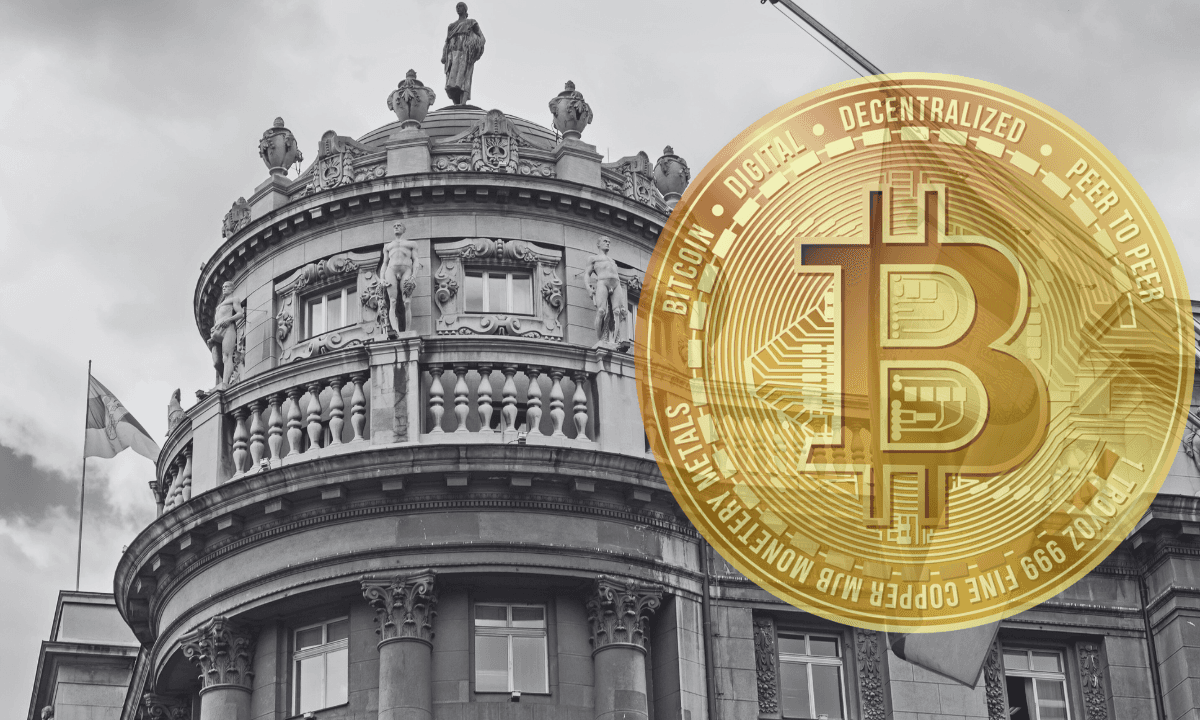
With the enactment of the Law on Digital Assets (LDA), "the door was opened" to include digital assets in business, i.e., legal relations.
Rules on Foreign Trade Operations
At first glance, it could also be said that settling obligations with cryptocurrency is not in line with foreign trade regulations. Namely, in accordance with those rules, a domestic entity may collect or pay for goods exported or imported, as well as services in foreign trade, in goods or services, especially if it relates to the procurement of equipment, raw materials, and components intended for the production of goods and provision of services, and if it relates to services provided in the procedure of inward or outward processing, in accordance with customs regulations, and collection or payment is made in goods that are the subject of processing, i.e., in processed goods.
Based on the authorization from the Law on Foreign Trade Operations (LFTO), a bylaw prescribes closer conditions for payment or collection in goods or services. These are the so-called "barter transactions" in foreign trade, where settling obligations with cryptocurrency is not prescribed as an option. In other words, it is implied that the legislator does not recognize the possibility of exchanging cryptocurrency for a service. This is not surprising, however, because we must keep the broader context in mind.
First of all, the LFTO was last amended in 2015 (five years before the enactment of the LDA), so it is difficult to defend the stance that its rules are authoritative in the domain of "payment" with cryptocurrencies. Because of this, we are not convinced that the legislator's intention was for the rules on compensation in foreign trade (as defined in the LFTO and NBS bylaws) to apply in the case of settling obligations with cryptocurrency.
In addition, the rule from the LFTO states that payment for services is "especially" possible in the cases listed (where cryptocurrency, of course, is not among them). In other words, the possibility is left for payment of services through compensation to be carried out in some other (not special) way. Furthermore, we recall that although cryptocurrency does not have the legal status of money, it has elements that are characteristic of money, i.e., its basic functions, primarily that money figures as a universal means of exchange.
Given that cryptocurrencies are neither goods nor services, but a completely new category of assets, therefore the rules from the LFTO and related bylaws are not applicable to B2B transactions of exchanging services for cryptocurrency.
In addition, compensation implies setting off a claim that a debtor has against a creditor with what the latter claims from him, if both claims are for money or other fungible things of the same kind and quality and if both are due. For example, A owes B the amount of 1,000 dinars, while B owes A the amount of 1,100 dinars, so these amounts will be balanced, and B will be obliged to pay A only 100 dinars.
Bearing this in mind, the terminology used in the LFTO and bylaws is highly problematic, since the legal transaction in question corresponds more to an accord and satisfaction than to compensation. Accord and satisfaction is a way of fulfilling an obligation whereby the creditor agrees with the debtor to receive something else instead of what is owed to him (e.g., A owes B the amount of 1,000 dinars, but they agree that A delivers a keyboard instead of monetary payment).
The transaction we are debating in this article refers precisely to the situation when a Serbian company agrees with a foreign company to, instead of paying in foreign currency, fulfill its obligation for the received service by transferring an agreed amount of cryptocurrency, and that is not compensation.
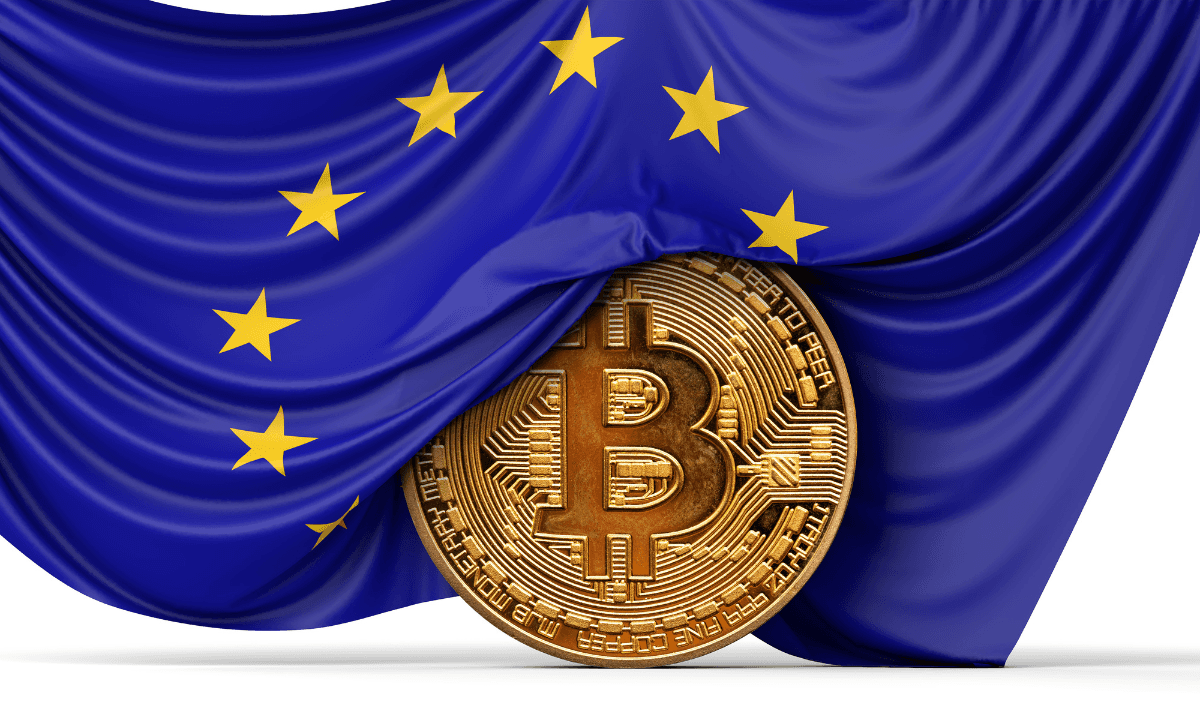
MiCA states that if used as a means of payment, digital assets can, by limiting the number of intermediaries, enable cheaper, faster, and more effective payments, especially cross-border payments.
Conclusion
We believe that rigid and formalistic conclusions about the impermissibility of exchanging cryptocurrency for services, based on a strictly linguistic interpretation of (in some cases) outdated and archaic regulations, are incorrect. Namely, such views run contrary to the purpose of digital assets, with one of the main goals, in accordance with the MiCA regulation, being precisely to simplify cross-border transactions.
The MiCA regulation additionally underlines the need to avoid imposing unnecessary and disproportionate regulatory burdens on the use of blockchain technology through legislative acts, in order to maintain competitiveness in the global market. In addition, this would potentially lead to a conflict with other fundamental principles of our legal system, such as the principle of technological neutrality and the narrowing of the constitutional right to property.
Since no official state financial institution stands behind cryptocurrency, its value depends precisely on how "exchangeable" it (the cryptocurrency) is. Suppressing the potential of its exchange with positions on the impermissibility of compensating cryptocurrency in exchange for services in cross-border B2B transactions is – in our opinion – incorrect.
And what happened to Hazard? He was at the peak of his career at a time, much like the crypto market, when the adoption of a law regulating digital assets was announced in our country. Hazard started the 2021-22 season in Real solidly, as did the implementation of the LDA when the first applications for granting licenses to provide services related to digital assets and the white paper were submitted, i.e., approved. However, things in Spain and Serbia took a turn for the worse.
Due to injuries and illness, Hazard was increasingly on the bench or out of the stadium, while the crypto market crisis strongly shook our IT industry as well, which is why numerous projects were paused and employees were laid off. Parallel to this, new, younger players arrived – Hazard was displaced by Vinicius Junior, and crypto by ChatGPT. Therefore, the Real coach's decision to keep Hazard on the bench more and more is not surprising, just as the undefined practice in the implementation of the LDA hampered its potential. Nevertheless, we hope that the similarities definitely end there, as Hazard retired at the end of 2023, and we believe that the LDA will return to form.
In addition to Ilija Rilaković, Dr. Minja Đokić participated as an author.
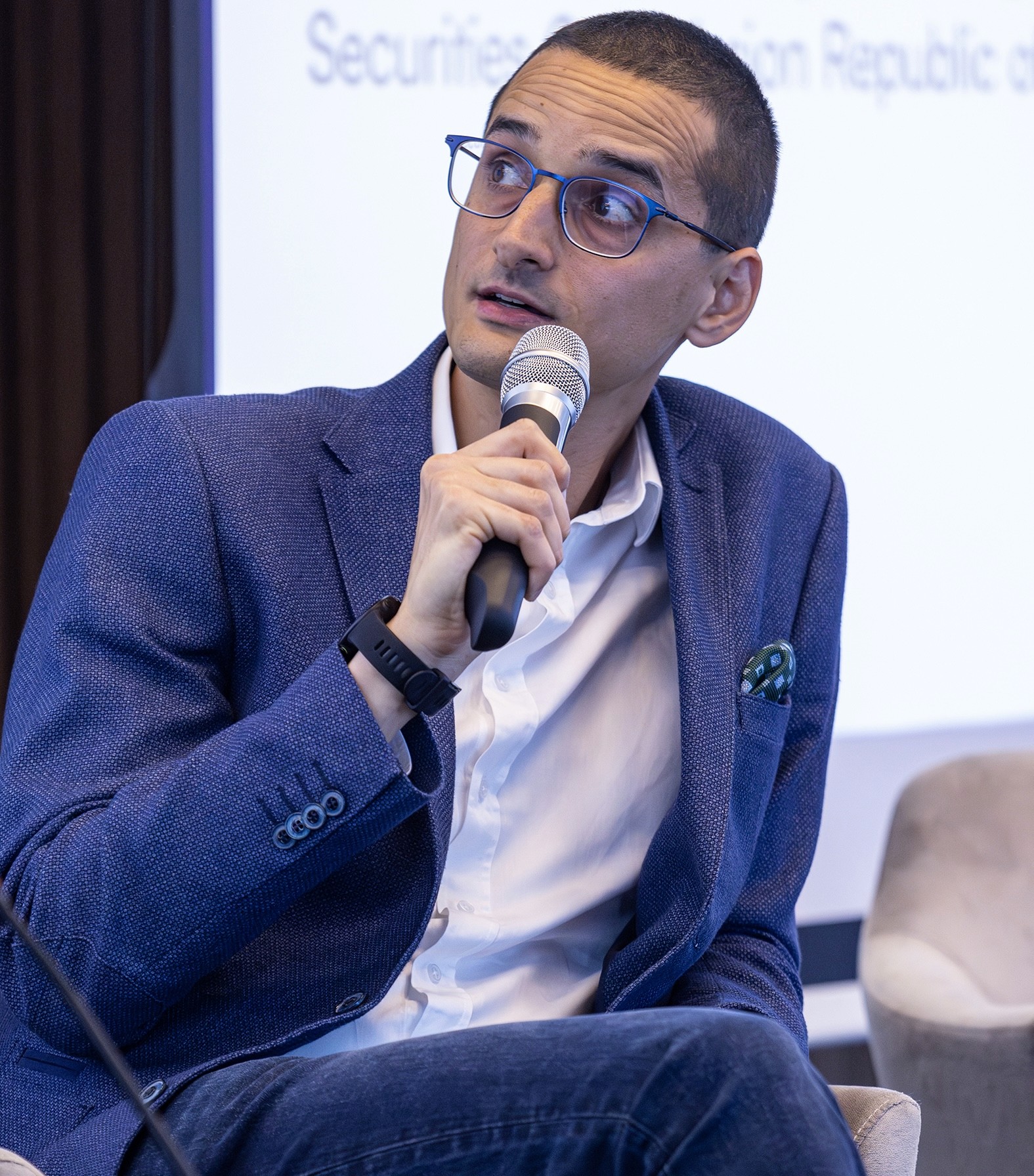
Ilija Rilaković
Since 2016, Ilija has been a member of the Belgrade Bar Association. His practice areas are commercial law, tax law, and digital asset law (cryptocurrencies, NFTs, etc.). Ilija graduated from the Faculty of Law in Belgrade, where he also completed his master’s studies in economic analysis of law. In addition, he pursued further studies at Vrije University Amsterdam in international business law.